Planning a children’s party can be exciting, but it also comes with plenty of small decisions. From decorations and invitations to games, food and entertainment, it’s easy to find yourself trying to organise too many things at once. Choosing a theme early on can make the process much simpler, giving the celebration a clear direction without requiring every detail to match perfectly.
The best themes aren’t necessarily the most elaborate or expensive. They’re the ones that give children something to get excited about while making it easier for parents to bring the different parts of the day together.
Start With What The Birthday Child Actually Enjoys
It sounds obvious, but the most successful party ideas usually begin with the child’s own interests. One might be fascinated by dinosaurs, another might love space, animals, superheroes or anything involving dressing up. Their current favourite subject can provide plenty of inspiration without needing to follow whatever happens to be popular at the moment.
It’s also worth considering how long an interest has lasted. A character they have loved for months might be a safer choice than something they mentioned once after seeing an advert. That doesn’t mean every theme needs extensive planning, but a little thought at the beginning can help avoid spending money on decorations that don’t really mean much to the birthday child.
Think About The Age Group And Guest List
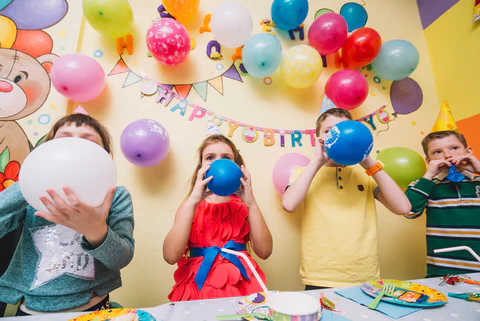
A theme that works brilliantly for five-year-olds might not appeal to children approaching their teenage years. Younger guests often enjoy bright colours, familiar characters and simple activities, whereas older children may prefer something with a little more independence, competition or creativity.
The guest list matters as well. If the party includes children of several different ages, choosing a theme with flexible activities can make the event more enjoyable for everyone. For example, an adventure theme could include a straightforward treasure hunt for younger children and more challenging clues for older guests.
There’s no need to make every activity suitable for every age, but it helps to avoid a theme that leaves a significant part of the guest list feeling excluded.
Let The Theme Guide The Decorations
Once the theme has been chosen, decorations become much easier to plan. A few carefully selected colours, balloons, table decorations and a suitable backdrop can create the right atmosphere without covering every available surface.
Parents sometimes feel that a themed party needs matching plates, cups, banners, tablecloths and decorations in every corner. In reality, children are usually more interested in the overall atmosphere than whether every item follows the same design.
A simple approach can also save money. Plain-coloured decorations can often be reused for other celebrations, while a handful of themed items provide the distinctive touches that make the party feel special.
Choose Activities That Fit The Idea
A theme becomes more memorable when children have something to do with it. An animal-themed celebration might include a guessing game, while a detective party could involve solving clues or finding hidden objects. For a sports theme, a few friendly challenges could give guests a chance to get involved.
The activities don’t need to be complicated. In fact, having too many structured games can make a party feel rushed, particularly when children want time to chat, explore and play independently.
When looking for fun themes for kids’ parties, it’s worth thinking beyond the decorations and considering how the idea could influence the actual experience. A theme that naturally suggests games and activities often makes planning the entertainment much easier.
Don’t Forget The Practical Details
Some themes look fantastic in photographs but can be difficult to organise in a particular venue. A large obstacle course, for instance, needs considerably more room than a craft-based celebration. Similarly, messy activities may not be ideal in a small indoor space or somewhere with strict cleaning requirements.
Before committing to an idea, consider the available space, the number of guests, the weather if the party is outdoors and the amount of preparation involved. It’s better to adapt a theme to suit the venue than spend the day trying to make an unsuitable setup work.
Parents should also think about costumes. Dressing up can add plenty of excitement, but it shouldn’t become an expectation that creates extra expense or pressure for families. Guests should be able to enjoy the celebration whether they arrive in costume or ordinary clothes.
Make The Food Part Of The Experience
Food doesn’t have to be an elaborate extension of the theme, but a few small touches can help tie everything together. Colourful fruit, simple sandwiches, themed cupcakes or creatively named snacks can add personality to the table without requiring hours in the kitchen.
It’s sensible to keep the menu familiar, especially when catering for younger children. Parents may also need to check for allergies and dietary requirements before deciding what to serve. A visually impressive spread isn’t much use if several guests can’t comfortably eat anything on it.
Keeping food manageable means there’s more time to enjoy the party rather than spending the entire afternoon preparing and serving it.
Leave Room For A Few Surprises
Even a well-organised celebration needs some flexibility. Children might become particularly interested in one game, take longer than expected with an activity or decide that they’d rather spend time playing with their friends. A rigid schedule can make these natural moments difficult to accommodate.
It’s useful to have a rough plan, but there’s no need to control every minute. Allowing a little breathing room gives children the chance to enjoy the celebration at their own pace.
Ultimately, a good party theme should make the day more enjoyable, not create another long list of responsibilities for parents. Start with an idea the birthday child genuinely loves, adapt it to the venue and guest list, and focus on a few details that bring everything together. The celebration doesn’t need to be perfect to become a favourite childhood memory.
About the Author