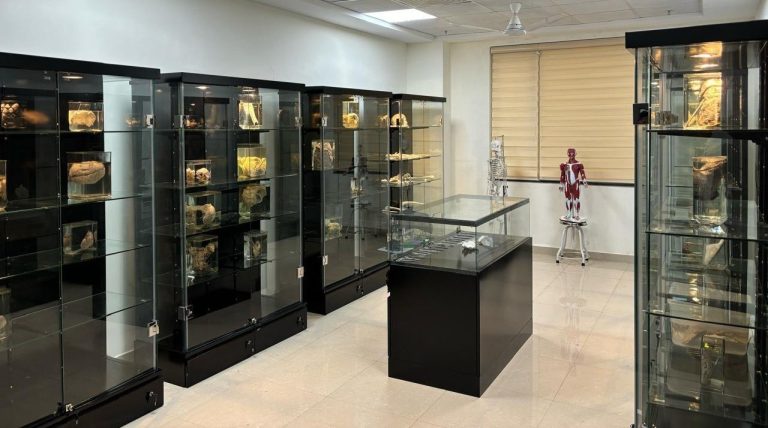
Empty space isn’t necessarily wasted space
When retailers are trying to get more products into a display, the first instinct is often to add another shelf. More levels mean more merchandise, so it seems like an easy way to increase capacity.
But shelves that are too close together can make the opposite happen. Products become difficult to see, customers can’t easily pick things up, and the whole display starts looking crowded.
Good merchandising needs some empty space around the product. That space helps customers understand what they are looking at.
Different products need different heights
A row of small boxes doesn’t need the same shelf spacing as a tall bottle, a pair of shoes or a larger packaged product.
Fixed shelf positions can therefore create problems when a store carries products of very different sizes. One shelf might have plenty of unused space above the merchandise while another is packed tightly.
Adjustable shelving gives retailers more control. The shelves can be moved as the product range changes rather than forcing every item into the same arrangement.
Think about viewing angles
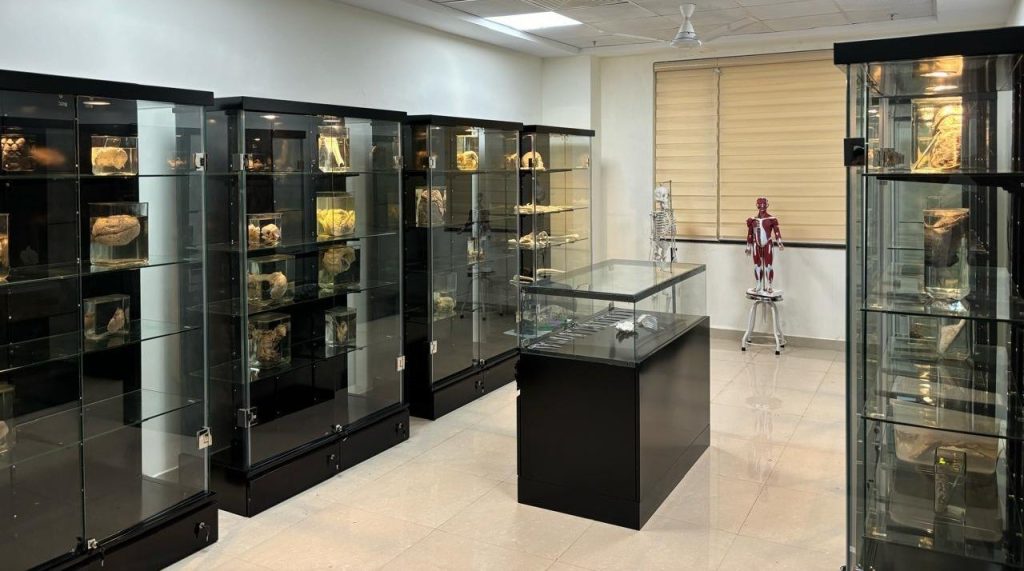
Shelf height also affects how easily products can be seen.
A product placed too low might disappear behind the edge of a display, while one placed too high may be difficult for shorter customers to inspect. In a glass cabinet, this becomes particularly noticeable because customers are often looking through the front rather than reaching directly for the merchandise.
Using glass shelves for display case installations can help create multiple presentation levels while maintaining an open view through the cabinet.
The point isn’t simply to add more shelves. Each level should have a clear visual purpose.
Don’t treat every shelf equally
A common mistake is filling every shelf to roughly the same density. That creates a very uniform display, but it can also make the products blend together.
Instead, consider giving important items more breathing room. A larger gap around a new product or a particularly valuable item can draw attention without needing additional signage.
Smaller products can then be grouped more tightly where appropriate.
Remember what happens when stock changes
Retail displays rarely stay exactly the same for long. New packaging arrives, seasonal products replace regular stock and certain items sell faster than expected.
A shelf arrangement that works perfectly in January might make little sense by June.
That’s why adjustable fixtures are generally more practical than layouts that depend on one exact product size. Staff can make small changes during normal merchandising rather than waiting for a complete fixture replacement.
Keep cleaning in mind
There is also a less glamorous side to shelf design: cleaning.
Glass displays show dust, fingerprints and smudges quickly. If shelves are tightly packed, cleaning around products becomes harder and staff may be less likely to do it properly.
Leaving enough room to remove products, wipe surfaces and rearrange stock makes routine maintenance much easier.
The best display isn’t the fullest one
A display case doesn’t need to hold the maximum possible number of products to be useful.
Customers need to see what is there, understand the differences between products and comfortably focus on individual items. Sometimes removing a few products or increasing the space between shelves makes the remaining merchandise noticeably easier to shop.
The goal is capacity, but it is useful capacity — stock that can actually be seen, understood and handled without the display working against the customer
About the Author